How Long Does a Power Flush Take?
A clear idea of timing before you book.
How long does a power flush take? Most power flushes take several hours and are often completed in a day, but the exact time depends on radiator count, system size, sludge level, access and whether extra cleaning or protection is needed. We diagnose first and confirm the likely timing, along with a clear quote, before agreed work begins.
The short answer A power flush usually takes several hours and is often completed in a day, but timing depends on the number of radiators, system condition, sludge level, access and whether extra cleaning is needed. We confirm the likely time before agreed work begins.
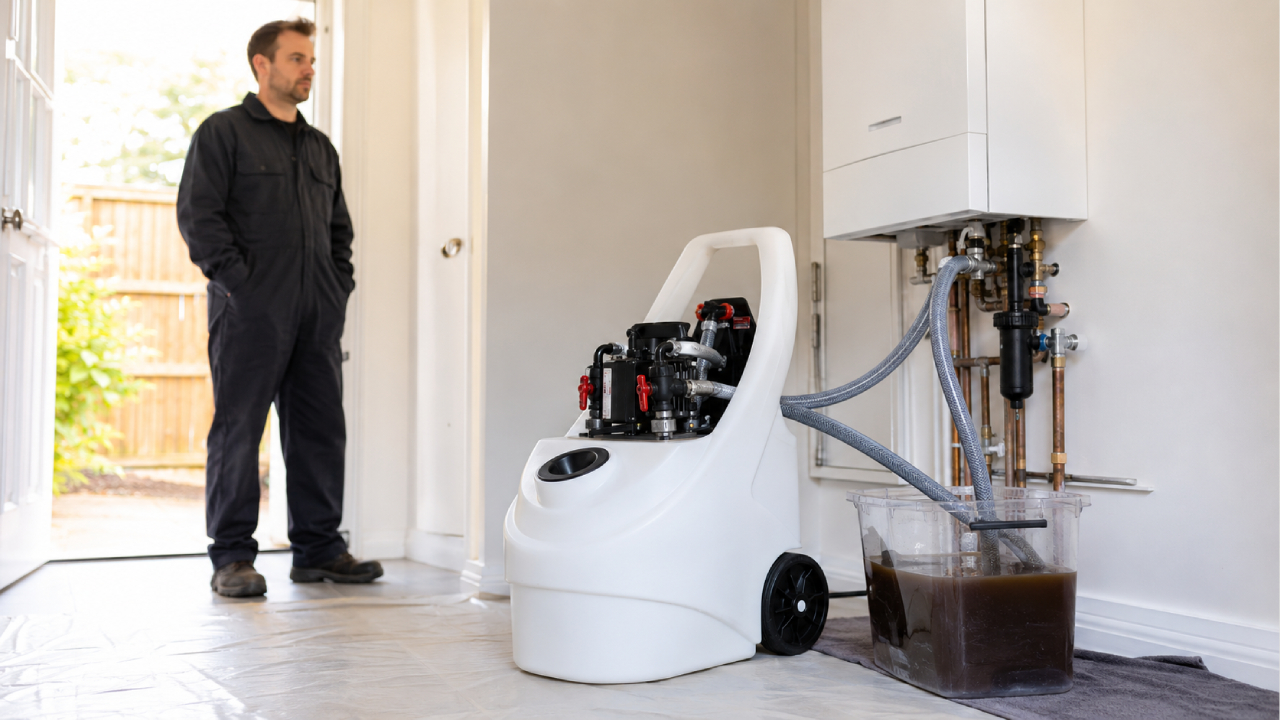
Typical time ranges
As a general guide, a smaller flat with a handful of radiators is often completed in around half a day, while a larger home with more radiators or heavier sludge can take most of a full day. These are guides rather than fixed promises, because the real time depends on what the system needs once work begins. Rather than commit to a set number of hours for every job, we give you a realistic estimate for your system and keep you updated on the day. To see the full process behind the timing, read what happens during a power flush.
What affects how long it takes
No two systems are the same, so the time on site varies. The main factors are:
- the number of radiators connected to the system
- the overall size and layout of the heating system
- how much sludge and magnetite have built up
- how easy the boiler, radiators and pipework are to access
- the condition of valves and whether any are seized
- whether extra cleaning, a magnetic filter or other protection is needed
You can see how these same factors shape the price on our power flush cost in London page.
Small flat vs larger house
Size is usually the biggest single factor. A small flat with five or six radiators normally takes less time than a larger house with ten or twelve, because there is more water to move and more radiators to work through and check. Each radiator is cleaned in turn, so more radiators simply means more time on the system before it is refilled and protected. A larger property with awkward access can add further time.
Heavy sludge or black water
When a system is heavily contaminated, more time is needed to shift the sludge safely. If you see black radiator water when bleeding a radiator, that usually points to a lot of built-up debris. The engineer may need to work radiator by radiator, allow the cleaning chemical longer, and flush repeatedly until the water runs clear. Rushing a badly sludged system does not give a good result, so a heavier clean reasonably takes more time.
Radiator count and access
Beyond the number of radiators, how easy they are to reach matters too. Radiators behind furniture or boxed in, boilers in awkward cupboards, or seized valves that need care all add time. If your radiators are cold at the bottom, that points to sludge sitting in the base of the radiator, which can also mean more time is spent clearing each one.
Chemical dwell time and flushing
A good clean is not just about moving water quickly. The cleaning chemical needs time to work, and the system is flushed and reversed until the water runs clear. This dwell and repeat process is part of why a thorough flush cannot be rushed into a rushed slot. It is also why a very quick job is not always a good sign.
Final checks and inhibitor
Once the system runs clean, the dirty water is removed, the system is refilled, and corrosion inhibitor is added to protect it. The system is then checked before the work is signed off. These final steps are quick compared with the clean itself, but they matter, because inhibitor is what helps keep the freshly cleaned system protected afterwards.
Why very cheap, quick flushes can be weak
A flush that is finished in a fraction of the usual time, at a price that looks too good to be true, may not have given the chemical time to work or flushed the system until it ran clear. That can leave sludge behind and a result that looks finished but is not. A thorough clean takes the time it takes. Power flushes may start from £380 for smaller systems, with the final quote based on diagnosis, radiator count and system condition, and we would always rather do the job properly than rush it.
Want a realistic time and price for your system?
Send your radiator count and symptoms for a clearer estimate. Call 020 8064 0234, and we will give you a realistic guide on timing and a clear quote before any work is agreed.
Related guides
Helpful reading: what happens during a power flush, how to power flush radiators, power flush machine hire vs professional, power flush cost in London, radiators cold at the bottom, and black radiator water.
How long does a power flush take? Timing answered
How long does a power flush take?
Can a power flush be done in one day?
Does a larger house take longer to power flush?
Why does sludge make a power flush take longer?
Do I need to be home during a power flush?
Can the heating be used during the work?
Does a longer power flush cost more?
Ready to plan your power flush?
Get a realistic guide on timing and a clear quote before any agreed work begins, with no pressure to flush if it is not the right fix.